Executive Summary
The Business Case I’ve sat through too many postmortems where “localization bottlenecks” quietly killed campaign velocity. Simon Says changes that equatio...
Ever burned a sprint waiting on transcripts, translations, and captions before you can ship globally?
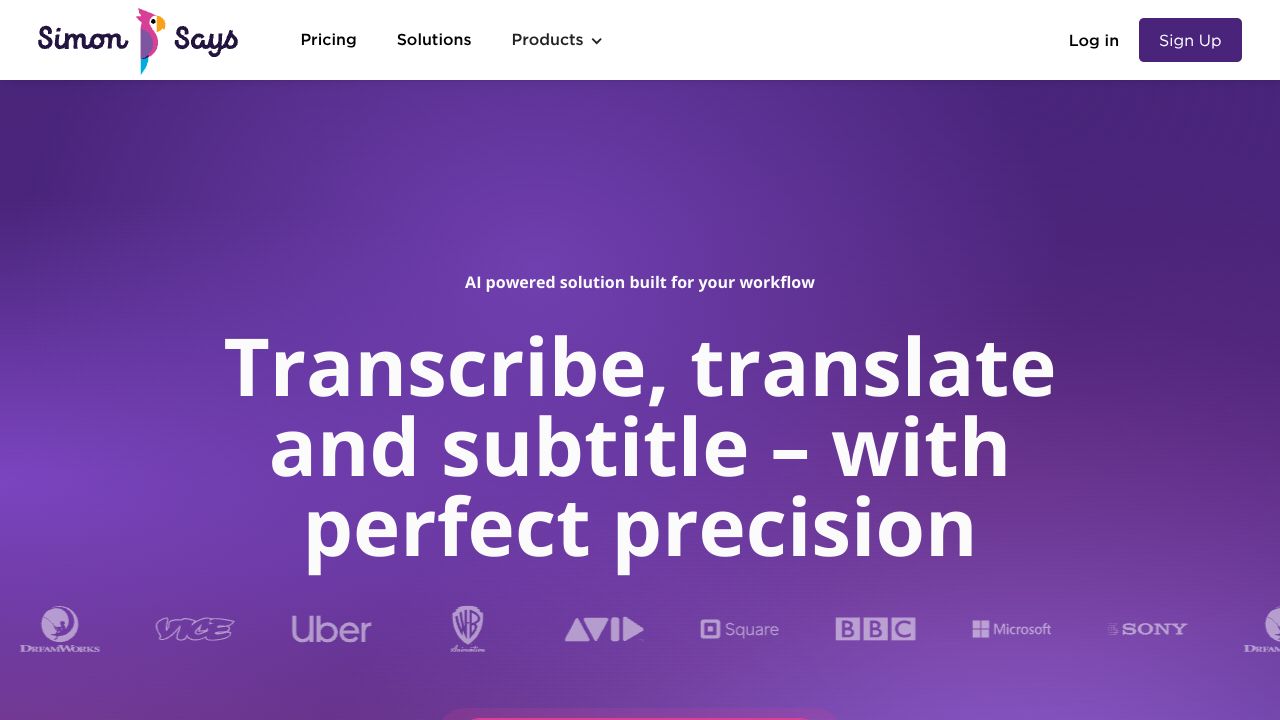
Simon Says AI is an end-to-end transcription, translation, subtitling, and captioning platform that plugs directly into pro editing stacks like Adobe Premiere Pro and Avid—and it can run fully on-prem for air‑gapped, high‑security work. It matters because it reliably compresses post workflows from days to hours, without leaking sensitive content to the cloud. Bottom line: if media is part of your product, GTM, or customer success engine, Simon Says is an operating leverage play, not a point tool.
The Business Case
I’ve sat through too many postmortems where “localization bottlenecks” quietly killed campaign velocity. Simon Says changes that equation by attacking cycle time, accuracy risk, and data exposure in one move. The on‑prem, offline deployment option is the headline for regulated or high‑stakes content—finance, healthcare, M&A, unreleased product footage—where a single leak is existential. Pair that with integrations into Premiere Pro, Avid Media Composer, and Final Cut Pro, and you’re not duct‑taping new tools onto your editors; you’re upgrading their existing workflow.
From a P&L perspective, you’re trading variable, error‑prone manual work for deterministic throughput in 100+ languages. Faster subtitles and captions expand addressable audience and accessibility compliance, while quicker translations accelerate multi‑market release windows. In my experience, shifting from “days” to “hours” on post-production isn’t just a feel‑good metric—it means earlier revenue capture on launches, more content shipped per quarter, and fewer late nights wrangling files. Strategically, that’s defensible speed with privacy guarantees your CISO can live with.
Key Strategic Benefits
-
Operational Efficiency: Native integrations let editors generate, edit, and export transcripts and captions inside the tools they already use—no context switching. The collaborative transcript editor (think Google Docs for media) reduces back‑and‑forth and slashes review latency across producers, legal, and localization.
-
Cost Impact: Pay‑As‑You‑Go at $15/hour of footage keeps spiky workloads lean, while Starter ($20/mo) and Pro ($35/mo) plans suit predictable pipelines. Expect fewer outsourced transcription tickets, less rework from accuracy misses, and faster time-to-publish that compounds across campaigns and product launches.
-
Scalability: Coverage for 100+ languages means you can add markets without adding a small army of freelancers. Batch processing and broad format support keep ingest simple as your volume and channel mix grow; on‑prem deployment scales with your infrastructure when cloud isn’t an option.
-
Risk Factors: AI accuracy can dip on low‑quality audio; bake in a QA pass for noisy sources and accents critical to your brand. On‑prem requires upfront coordination (hardware sizing, IT/security approvals), and teams will need lightweight change management to adopt in‑editor plugins and transcript review norms.
Implementation Considerations
Treat this like any production-grade rollout, not a toy pilot. Week 1: identify two to three high‑value use cases (e.g., product launch sizzle, executive town hall, customer story), define KPIs (turnaround time, accuracy, rework hours), and install the NLE plugins. Week 2–3: run a structured proof of value—cloud for general content; on‑prem for sensitive material—with legal and security reviewing data pathways and retention.
If you go on‑prem/offline, budget time for security sign‑off, hardware provisioning, and storage planning; the upside is total control and zero cloud transmission. Stand up a lightweight workflow: who ingests, who edits transcripts, who approves captions, and how exports feed back into your DAM. In my teams, a 60‑minute enablement session plus a written “captioning playbook” got editors productive fast. Integrate SSO, set default language packs, and templatize export presets so nobody invents their own process at 2 a.m.
Competitive Landscape
While ListenAll excels at podcast-focused transcription and analytics for online media, Simon Says is better suited for deep post‑production in NLEs and for enterprises that require air‑gapped, offline processing. Maestra shines for browser‑based teams seeking straightforward transcribe‑caption‑translate to expand global reach; Simon Says pulls ahead when you need tight editor integrations, collaborative transcript workflows, and on‑prem for sensitive content. Veed.io is a creator‑friendly video editor with built‑in transcription—great if you want an all‑in‑one web studio—whereas Simon Says is the pro‑grade layer that slots into Premiere/Avid and scales across enterprise governance. Price‑wise, Simon Says’ Pay‑As‑You‑Go and tiered plans make it flexible for both spiky projects and steady pipelines.
Recommendation
If media supports your sales, product education, or brand, green‑light a two‑week proof of value with Simon Says (start at https://www.simonsays.ai). Run side‑by‑side comparisons on two real projects across three languages, measure time‑to‑publish and QA edits, and pressure‑test the on‑prem option with security. If it clears your KPIs, lock in a plan (Pay‑As‑You‑Go for bursts; Starter/Pro for cadence), standardize the plugin workflow, and add accuracy SLAs to your content playbook. Your editors—and your ship dates—will thank you.
Learn More About Simon Says
Visit the official website for additional documentation and resources.
Visit Website